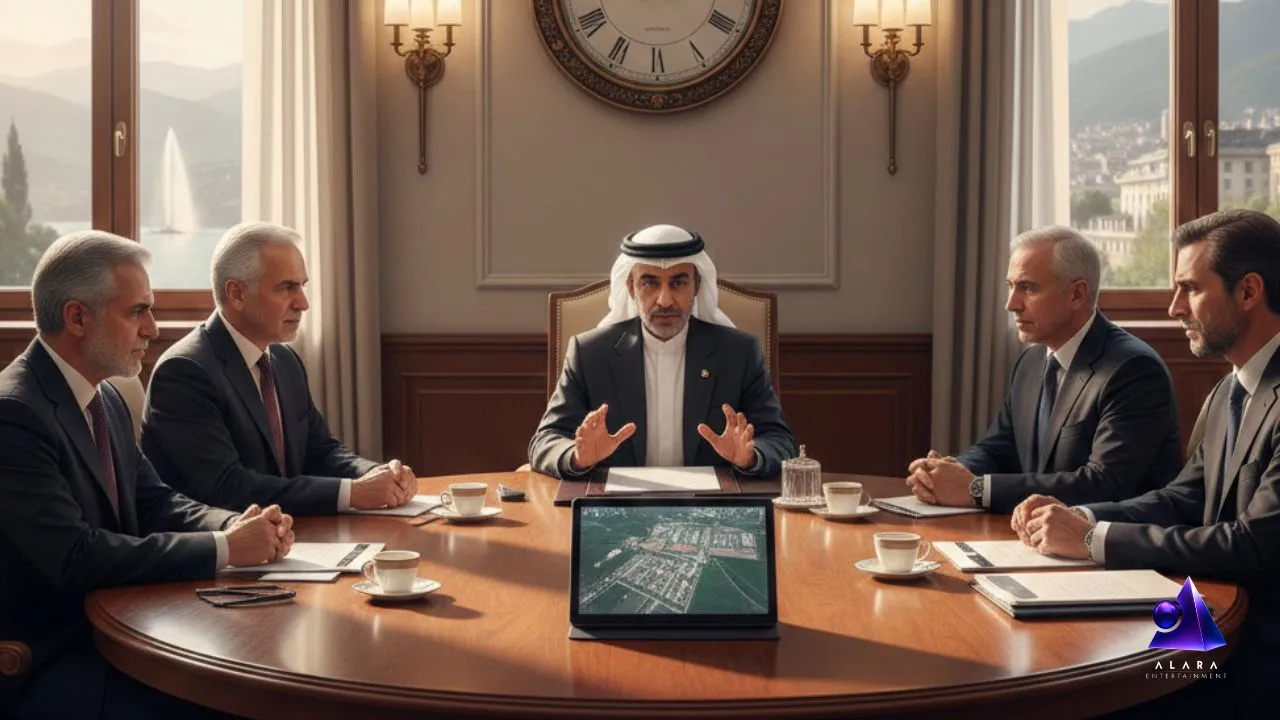
As military and diplomatic tensions between Tehran and Washington reach a critical boiling point, Omani Foreign Minister Badr Albusaidi has officially announced that a new round of indirect negotiations between Iran and the United States will take place this Thursday, February 26, 2026, in Geneva, Switzerland.
Muscat’s Mediation: A Final Effort to Avert Military Confrontation
Oman, long recognized as the primary diplomatic bridge between Iran and the West, is once again playing a pivotal role in organizing this high-stakes summit. In a statement on X (formerly Twitter), Albusaidi expressed “cautious optimism,” noting that there is “positive pressure” to finalize an agreement and that both parties appear ready to take the final steps toward a breakthrough.
Trump’s 15-Day Deadline: Diplomacy Under the Shadow of Threat
This new round of talks unfolds as U.S. President Donald Trump adopts an increasingly aggressive stance. Trump has recently issued a strict 10-to-15-day deadline for reaching a deal, warning that “unfortunate things” will happen to Tehran if diplomacy fails.
Simultaneously, Pentagon reports indicate a significant buildup of U.S. military assets in the region, including the deployment of advanced air defense systems and troop movements across bases in Bahrain, Iraq, and Syria. This military posturing clearly signals a “maximum pressure” strategy aimed at gaining leverage at the negotiating table.
Tehran’s Stance: Cautious Optimism and Strategic Readiness
On the other side, Iranian Foreign Minister Abbas Araghchi confirmed in recent interviews the likelihood of meeting with Steve Witkoff, Trump’s special envoy, in Geneva. Emphasizing that “diplomacy is the only solution,” Araghchi stated that Tehran is currently finalizing its proposed draft.
Iran maintains that achieving a deal “better than the 2015 JCPOA” is possible, provided that Iran’s nuclear rights are recognized and sanctions are lifted. However, President Masoud Pezeshkian, while acknowledging encouraging signals, stressed that Iran’s armed forces remain fully prepared for any scenario should diplomacy collapse.
Core Contentions: Enrichment and Regional Influence
Despite minor progress, two major hurdles remain:
- Uranium Enrichment: Washington demands a total halt to enrichment, while Tehran views it as a sovereign right.
- Scope of the Deal: The U.S. and Israel insist that Iran’s ballistic missile program and regional influence be included, but Iran maintains that talks must remain “strictly nuclear.”
The Stakes of the New Round of Talks
The Thursday session in Geneva could determine the path toward either peace or a wider confrontation in the Middle East. With domestic public pressure in Iran and explicit threats from Washington, both sides are operating under a tight clock. Whether Omani “positive pressure” can outweigh Trump’s “deadline” will be revealed by the end of this week.
Stay tuned for daily updates on Alara Entertainment!
Last Updated on 27, February 2026 by admin | Published: 23, February 2026