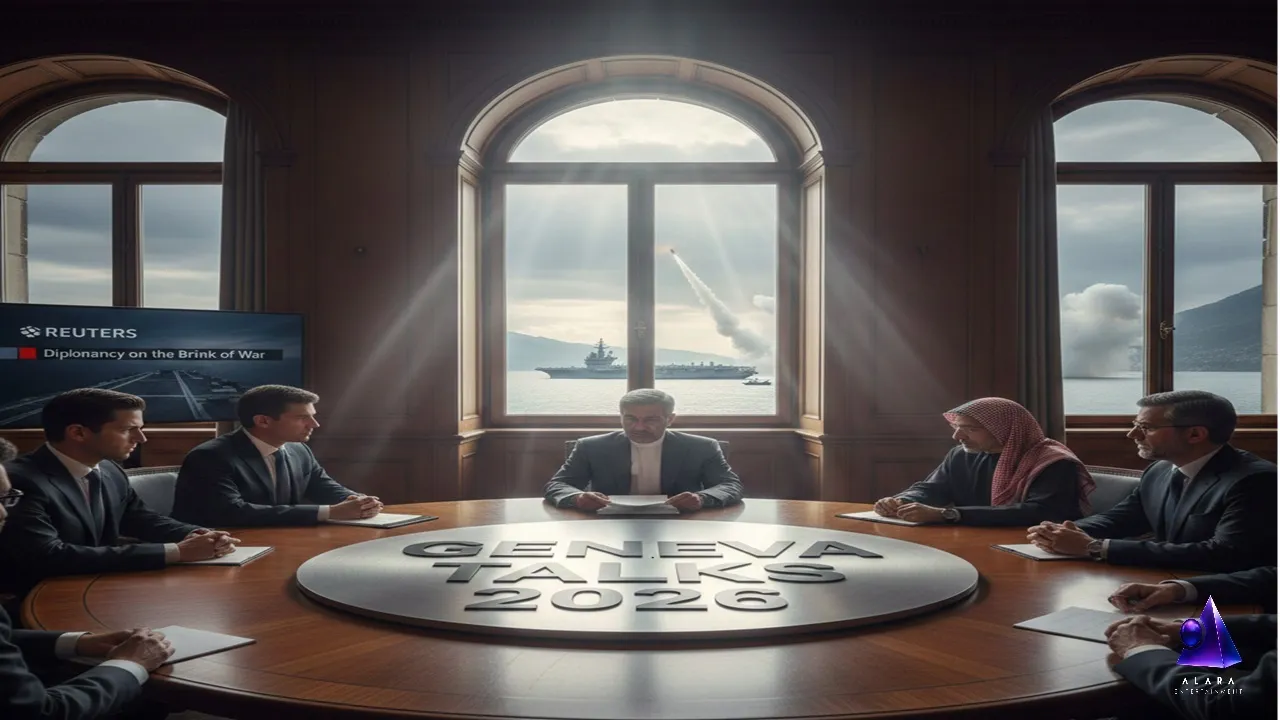
Geneva, February 2026 As the world watches with bated breath, the second round of indirect Geneva talks between the Islamic Republic of Iran and the United States has commenced in an atmosphere filled with both hope and dread. According to Reuters, these discussions are taking place as the U.S. naval presence in the region intensifies, with the heavy shadow of military threats looming larger than ever over the negotiating table.
Key Figures in the Geneva Talks
A standout feature of this round is the composition of the Washington delegation. The presence of Jared Kushner and Steve Witkoff as special envoys for Donald Trump signals the White House’s preference for a direct, personalized approach to the Iran file. On the other side, Abbas Araghchi, Iran’s Foreign Minister, leads the Tehran negotiating team. Oman continues its role as the primary mediator, facilitating the exchange of messages between the two parties.
Guiding Principles and Initial Progress
After hours of intensive dialogue, Abbas Araghchi cautiously announced that both sides have reached a set of “Guiding Principles.” While he emphasized that the road to a final agreement remains arduous, analysts view this preliminary framework as a potential window to prevent military confrontation. U.S. officials also confirmed slight progress, noting that Iran is expected to submit detailed written proposals within the next two weeks to bridge existing gaps.
Diplomacy Under the Shadow of Gunpowder: Power Displays in the Persian Gulf
What distinguishes the 2026 Geneva talks from previous rounds is their synchronization with massive military maneuvers. While Kushner and Araghchi were present in Geneva, Iran conducted missile drills in the Strait of Hormuz. Simultaneously, Donald Trump deployed the USS Gerald R. Ford aircraft carrier to the region, pursuing a “Maximum Pressure Plus” policy. Trump explicitly stated: “I don’t think they (the Iranians) want the consequences of no deal.” These words underscore that the U.S. is using military leverage as a core part of its bargaining strategy.
Points of Contention in the Geneva Talks: Beyond Enrichment
The core divides between Tehran and Washington remain deep:
- Enrichment Levels: Washington demands a total halt to enrichment and the removal of uranium stockpiles from Iran, while Tehran insists on its right to peaceful enrichment.
- Ballistic Missiles: Under pressure from regional allies, including Israel, the Trump administration insists that Iran’s missile capabilities must be part of any new deal.
- Sanctions Relief: Iran is only willing to scale back its nuclear activities if economic sanctions are fully and guarantees-backed lifted.
Conclusion and Future Outlook
The Geneva negotiations have shown that both sides, despite their harsh rhetoric, fear the outbreak of an all-out war. However, Washington’s unwritten deadlines and military readiness for potential operations by mid-March have severely limited the window for diplomacy. The next two weeks and Iran’s written proposals will determine whether the world witnesses a “Grand Bargain” or the spark of a new war in the Middle East.
Stay tuned for daily news at Alara Entertainment!
Last Updated on 19, February 2026 by admin | Published: 19, February 2026