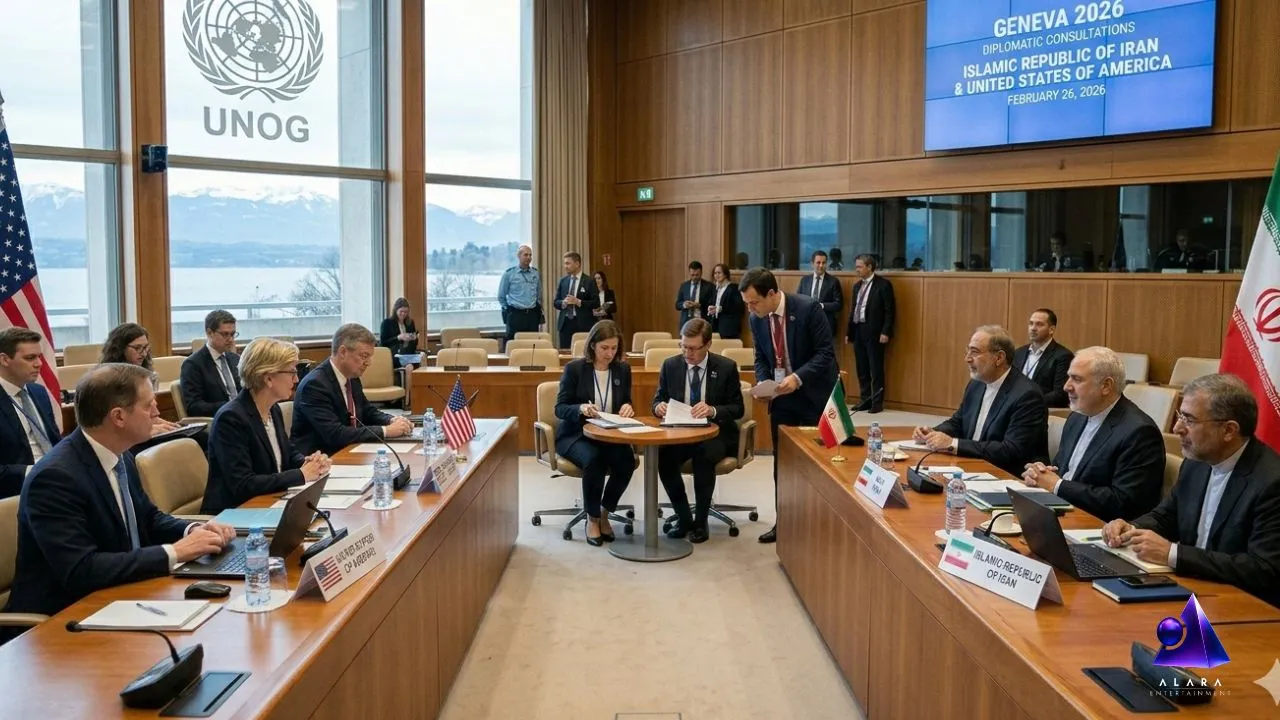
As international diplomatic tensions reach a critical stage, the city of Geneva has once again become the focal point of global politics. Today, February 26, 2026, senior representatives from Tehran and Washington began a new round of indirect negotiations aimed at breaking the deadlock over the nuclear file and preventing potential confrontations. This summit is taking place at a time when international pressure to reach a sustainable framework has reached its peak. Stay with Alara Entertainment for the rest of this report.
Efforts to Revive the Tehran and Washington Negotiation Table in Switzerland
According to official reports published by Euronews, these talks have been organized through the mediation of European Union officials and the Swiss government. The delegation from Tehran, led by the Foreign Minister, and the American team, headed by the White House Special Envoy, are stationed in separate buildings to exchange new demands and proposals through intermediaries. The primary focus of this round of talks is centered on “verification of nuclear actions” and “modalities for lifting economic sanctions.”
The United States government, which had previously adopted a hardline stance, has now entered the field with a different approach. On the other hand, Iranian officials have stated that they will only be willing to roll back certain technical steps in their nuclear program if they receive written and objective guarantees that Washington will not unilaterally withdraw from the agreement again. This clash of views has made the negotiating atmosphere increasingly complex.
Key Pillars: Enrichment and Sanctions Relief
Sources close to the negotiating teams have revealed that the agenda for this meeting includes three main axes: First, determining the fate of advanced centrifuges and Iran’s enriched uranium stockpiles; second, drafting a precise timetable for lifting banking and oil sanctions that have impacted the Iranian economy; and third, a new monitoring mechanism that goes beyond previous IAEA protocols.
- Evaluation of the “Freeze-for-Freeze” proposal for immediate de-escalation.
- Discussion on the guaranteeing role of third-party countries for the agreement’s sustainability.
- Assessing the impact of developments in Ukraine and the Middle East on the final agreement process.
International Reactions to the February 26 Summit
Global markets reacted positively as soon as the news of the start of these negotiations was released. Oil prices saw a relative decline, reflecting traders’ hopes for stability in the Middle East. However, the parliaments of both countries and political hardliners in Washington and Tehran are closely monitoring the details of the concessions being exchanged. Analysts believe that any slip at this stage could lead to a complete failure of the diplomatic path and a return to the “Maximum Pressure” policy.
During the Tehran and Washington meeting, the EU coordinator emphasized that the window of opportunity for diplomacy will not remain open forever, and both sides must seize this opportunity to prevent a larger crisis in the spring of 2026. These talks are expected to continue until the end of the week, with a joint statement on potential progress likely to be issued.
Last Updated on 26, February 2026 by admin | Published: 26, February 2026