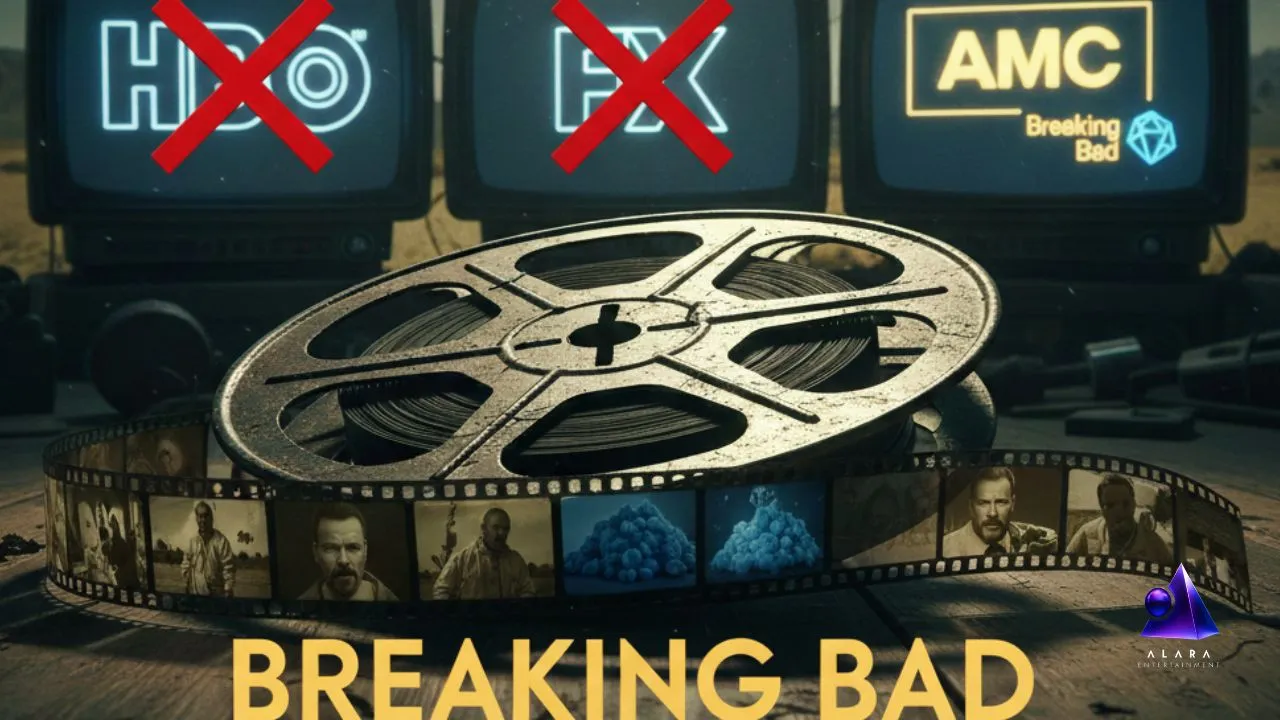
What would the world of television look like without Walter White and his blue empire? It is hard to imagine that Breaking Bad, now recognized as one of the masterpieces in dramatic history, was once on the verge of being canceled or aired on a completely different network. Based on recent reports and interviews from the production team, Walter White’s journey to becoming “Heisenberg” was much more turbulent than fans might think.
Traces of Major Networks: When FX and HBO Regretted Their Choice
Interestingly, AMC was not Vince Gilligan’s first choice. According to released information, Breaking Bad was initially pitched to prestigious networks such as HBO, Showtime, and FX. FX even progressed to the early stages of development but ultimately withdrew from the project due to potential similarities with their other shows and the high risk of the storyline.
In his memoirs, Vince Gilligan mentions that many network executives at the time could not imagine an audience empathizing with a man who has cancer and turns to manufacturing drugs to support his family financially. These consecutive rejections almost strangled one of the 21st century’s greatest projects in its infancy.
Changing Walter White’s Fate: From Comedy to Dark Drama
Many critics believe that the success of the series is due to the brilliant casting. Bryan Cranston was primarily known for comedic roles (especially in Malcolm in the Middle) before this show. Network executives were initially hesitant about his selection and were looking for more famous options. However, Gilligan, who had experience working with Cranston on The X-Files, knew he was the only one who could simultaneously portray Walter’s innocence and Heisenberg’s darkness.
Why is Breaking Bad Still Alive After All These Years?
What distinguishes Breaking Bad from other crime dramas is “transformation.” Vince Gilligan sold the show with this pitch: “Turning Mr. Chips into Scarface.” In most series, characters remain static, but here we witness the gradual moral decay of a human being. Every small decision made by Walter White had massive consequences that were logically and ruthlessly woven into the script.
In addition to the screenplay, the cinematography techniques in Albuquerque, the use of unconventional camera angles, and complex symbolism (like the pink teddy bear or the shoes in the desert) added deep layers to the story that are still taught in film schools today.
An Unending Legacy
The success of Breaking Bad led to the expansion of its universe with the spin-off Better Call Saul and the film El Camino. This demonstrates that Gilligan’s character development was so powerful that audiences are still hungry for more stories from that atmosphere. Breaking Bad proved that TV audiences are intelligent and welcome grey narratives and anti-heroes who defy the rules of society.
Last Updated on 6, January 2026 by admin | Published: 6, January 2026