
When an explosion occurs nearby, the most common threat to people inside buildings is not structural collapse but high-velocity glass shards and doors torn off by sudden pressure changes. This practical guide outlines what to do and what to avoid to reduce the danger of flying glass and failing interior doors. For the physics behind it, see the blast wave entry.
Why flying glass is the primary hazard
A blast wave delivers an intense, short-lived, directional overpressure. Depending on the wave’s direction, building geometry, and the type of openings, that pressure can shatter windows, rip frames, and even split hollow-core interior doors. You cannot reliably prevent breakage under strong blasts—but you can reduce how far and how violently shards travel.
The golden rule: stay away from windows and pick a safe room
If you do only one thing, do this: move beds, desks, play areas, and seating away from direct window lines into “blind zones” of rooms (walls not facing windows). Designate a safe room with minimal or no glazing—interior hallways and windowless bathrooms are often best. At the first warning, everyone should relocate there. Distance from glass is the single most effective protector; all other measures only mitigate, not eliminate, risk.
Practical ways to reduce glass-shrapnel risk
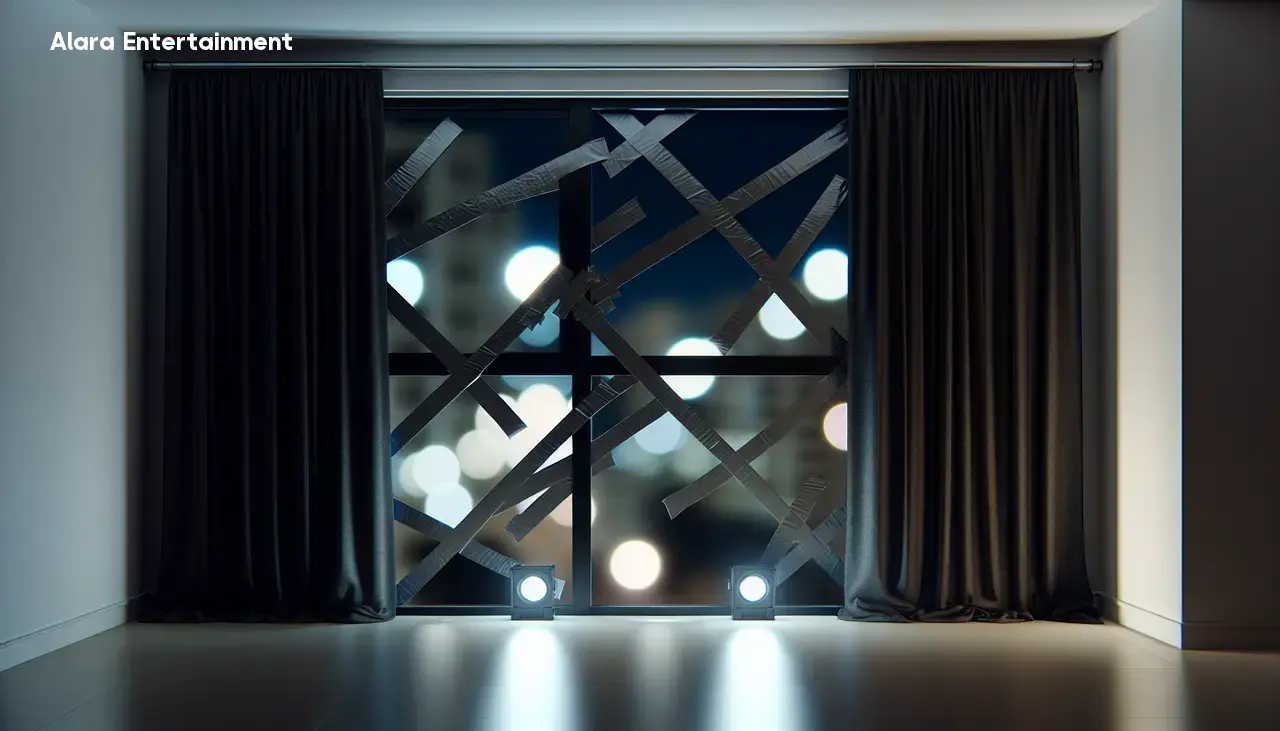
1) Duct-tape crosshatching
Proper taping can act like a temporary net and help keep fragments together:
- Prefer duct tape; if unavailable, use wide, thick packing tape.
- From the inside, apply a large corner-to-corner X across the pane.
- Add oblique strips to form a full crosshatched grid over the glass.
- Extend tape ends onto the window frame so the entire pane is less likely to eject as one piece.
2) Blanket shield with anchored bottom edge
Hanging a heavy blanket or duvet behind windows can capture shards—but only if the bottom edge is secured. Otherwise, the blast lifts the fabric and shards slip under it. Anchor the lower edge with heavy furniture or fix the corners to the wall so it functions as a net.
3) Clear security window films
If budget allows, clear security films of at least 4-mil thickness perform better than ordinary tape at holding fragments together. Results depend on thickness and proper installation. Learn more about the category on window film.
4) Safe layout: clear direct window paths
Never place beds or long-use seating directly opposite windows. Relocate beds, couches, office chairs, and computer desks to side or interior walls. Even with reinforced glazing, removing yourself from the line of fire matters most.
5) Ease pressure differentials: slightly open two windows
Pressure differentials are what destroy windows and interior doors. During high-risk periods, leaving two windows slightly open in different parts of the home can provide a pressure path, reducing stress on interior elements. Balance is key: too wide compromises security; too narrow has little effect.
6) A micro kit for shard-related injuries
Post-breakage injuries often happen when someone steps on glass in the dark. Keep a small kit in the safe room:
- Sturdy closed-toe shoes
- Basic eye protection
- Work gloves
- Flashlight
- Sterile gauze and essentials for basic wound care
Door safety under blast conditions
Blast waves can shear hinges, destroy latch plates, or yank entire doors from frames. Choose safe-room spots away from door swing paths to avoid being struck by a door turned projectile.
1) Reinforce connections: hinges and strike plates
Short, worn screws and hardware fail quickly under sudden loads. Where feasible, replace with long steel screws (at least 7–10 cm) and upgrade to longer, thicker strike plates and latches. Small, targeted hardware improvements can significantly increase resistance to pull-out.
2) Keep lightweight interior doors open
Hollow-core interior doors are prone to cracking or ejecting from frames under differential pressure. In high-risk windows, leave these doors open or block them from slamming to help equalize pressure and give the wave a path through.
Extra tips and common mistakes
- Don’t stand behind or stare at windows; turn away and maximize distance from glazing.
- Tape and films are not magic shields; they only improve odds by reducing dispersion of fragments.
- After any alert, check footpaths with a flashlight to avoid stepping on shards.
- Practice routes to the safe room so everyone knows where to go immediately.
Last Updated on 14, March 2026 by admin | Published: 14, March 2026