
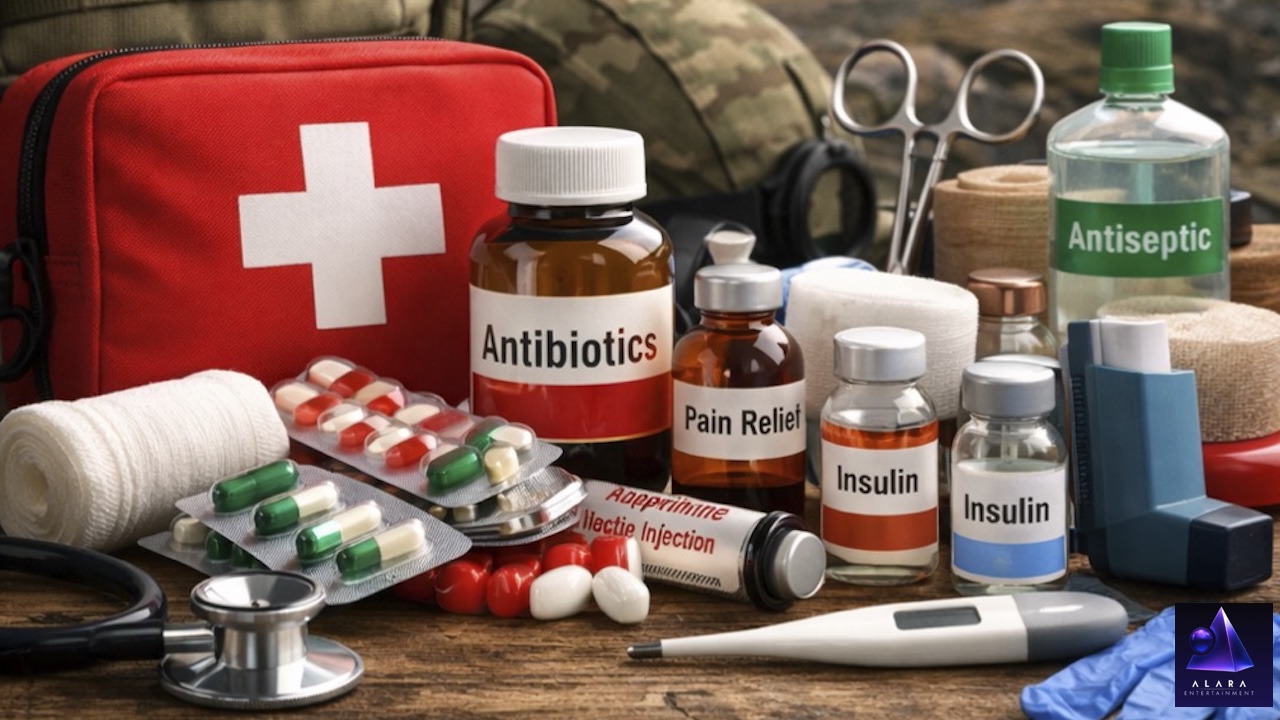
In times of crisis and war, access to medical services may be disrupted or delayed. For this reason, being familiar with essential medicines and basic medical equipment is very important. Preparing a standard emergency medical kit is not only about storing medicines; it also involves understanding how each medicine works, how to store it properly, and how to use it safely.In such situations, families should be able to provide basic first aid and medical care at home. In this guide prepared by Alara Entertainment, we introduce the most important medicines and medical supplies that can be life-saving during war and crisis situations.
1. Pain Relievers and Fever Reducers
Pain relievers are among the most important medicines that should be included in every emergency medical kit. These medications help reduce pain, control fever, and manage inflammation caused by minor injuries.
Acetaminophen (Paracetamol)
This medicine is used to reduce fever and relieve mild to moderate pain such as headaches, muscle pain, or pain from minor injuries. Taking too much acetaminophen can damage the liver, so it should always be taken according to the recommended dosage.
Ibuprofen
Ibuprofen not only reduces pain and fever but also has anti-inflammatory properties. It is commonly used for muscle pain, joint pain, and some types of headaches. People with stomach problems or kidney disease should use this medicine with caution.
Naproxen
This medicine is used to reduce inflammatory pain and some chronic pain conditions. Like other anti-inflammatory drugs, excessive use may cause digestive problems.
2. Antibiotics and Disinfectants
During wartime, the risk of infected wounds, skin infections, and respiratory infections increases. For this reason, having certain antibiotics and disinfectants in an emergency medical kit is very important.
- Amoxicillin or Amoxiclav: for some common bacterial infections
- Doxycycline: for certain skin and respiratory infections
- Ciprofloxacin: for some urinary and gastrointestinal infections
In addition, disinfectant solutions such as betadine or chlorhexidine are important for cleaning wounds and preventing infection. Topical antibiotic ointments can also be useful for treating minor wounds.
3. Digestive and Anti-Diarrhea Medicines
During crises, digestive problems may increase due to contaminated water, spoiled food, or severe stress. Severe diarrhea and vomiting can quickly lead to dehydration, which is especially dangerous for children and the elderly.
- Loperamide: to reduce bowel movement and control diarrhea
- ORS powder (oral rehydration salts): to replace lost fluids and electrolytes
- Antacid medicines such as famotidine: to reduce stomach acid and reflux
4. Anti-Allergy Medicines
During wartime conditions, people may be exposed to new or polluted environmental factors that can trigger allergic reactions. Some of these reactions can become life-threatening if they are severe.
- Antihistamines such as loratadine or cetirizine to reduce allergy symptoms
- Injectable epinephrine (adrenaline) for severe allergic reactions
Antihistamines can help relieve mild symptoms such as itching or runny nose. However, in severe reactions such as anaphylactic shock, epinephrine must be used immediately.
5. Medicines for People with Chronic Diseases
People who suffer from chronic conditions such as diabetes, high blood pressure, heart disease, or asthma should pay special attention to storing their medications. Suddenly stopping these medicines can lead to serious health complications.
For example:
- People with diabetes should keep insulin or blood sugar control medications available.
- Heart patients may require blood pressure medications or blood-thinning drugs.
- People with asthma should have inhalers and respiratory medications with them.
It is recommended that these medicines be stored separately along with the person’s medical information.
6. Essential Medical Equipment
Medicines are only part of the medical needs during a crisis. Having certain medical tools can make a big difference in providing first aid.
- Sterile bandages and gauze
- Disposable gloves
- Surgical masks
- Disinfectant solutions
- Medical scissors
- Tweezers
- Splints for stabilizing fractures
These tools can help control bleeding, protect wounds, and prevent the spread of infections.
Conclusion
Being prepared for crisis situations, especially during war, requires planning and awareness. Having a complete medical kit that includes pain relievers, antibiotics, chronic disease medications, and basic medical supplies can play a vital role in protecting the health of your family.
At the Alara website, we aim to increase public awareness about health and crisis management by providing practical and educational content. It is always recommended to consult a doctor or healthcare professional before purchasing or using any medication.
Last Updated on 8, March 2026 by admin | Published: 8, March 2026