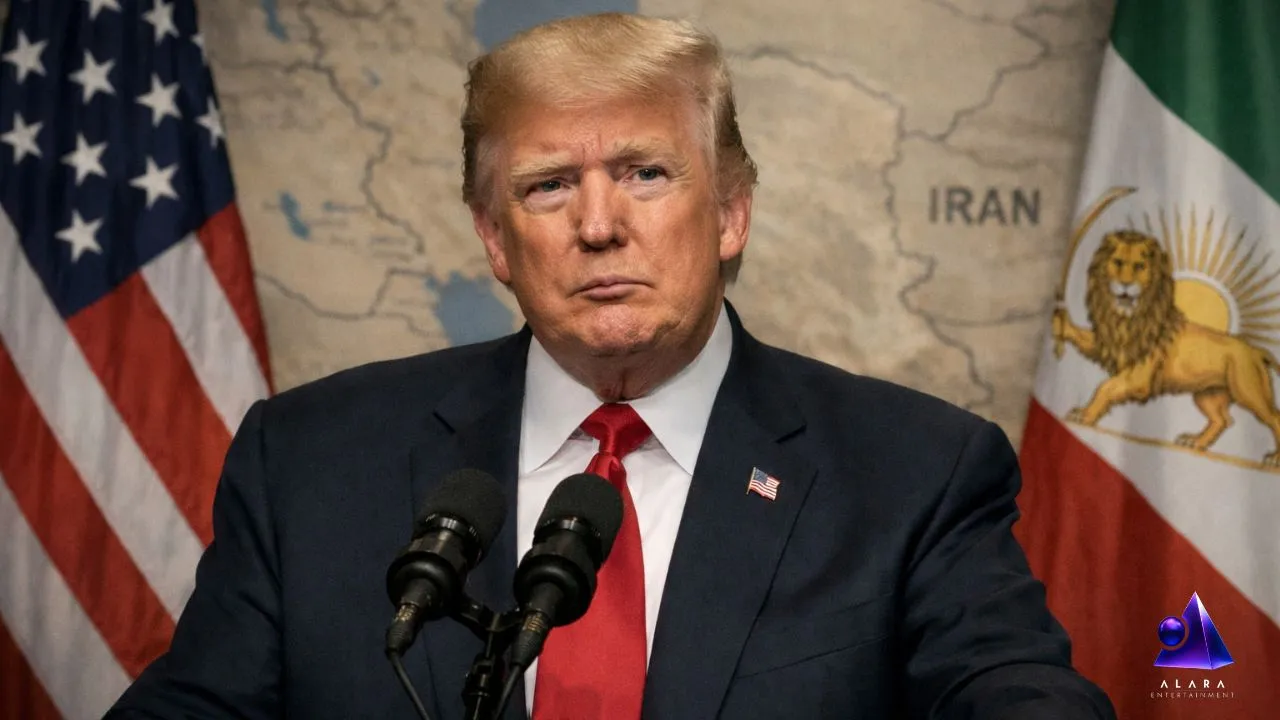
As military tensions in the Middle East rise rapidly, U.S. President Donald Trump announced that no deal with Iran will be possible until there is an “unconditional surrender.” His remarks come at a time when the region is facing one of its most tense periods in recent years, and concerns about the spread of conflict are growing day by day.
Trump’s Hardline Stance on Iran
According to published reports, Donald Trump recently emphasized that the United States should not enter any negotiations or agreements with Iran unless Tehran first accepts conditions he described as full surrender to international demands. This statement comes as tensions between Iran, Israel, and the United States reach one of their most critical stages.
Trump also stressed that political and military pressure on Iran must continue so that, in his view, fundamental changes occur in the country’s regional behavior and security policies. His remarks have been widely covered in international media and have sparked varying reactions among political analysts and international relations experts.
Escalating Crisis in the Middle East
In recent days, military developments in the Middle East have raised concerns about a broader conflict. Reports indicate a series of attacks and counteractions among regional and international actors, which could have wide-ranging consequences for regional security and even the global economy.
Analysts believe that any escalation in a region through which major energy and trade routes pass could directly affect global markets. Rising tensions may also increase political and economic pressures on different governments.
International Reactions and Concerns
Trump’s statements have received mixed reactions worldwide. Some politicians and analysts believe such positions could limit diplomatic space and make political solutions for reducing tensions more difficult. Others argue that a maximum-pressure policy may push Iran to change its approach in certain areas.
At the same time, many international organizations and humanitarian groups have warned about the rising violence in the region and urged the parties involved to avoid escalating the crisis. They emphasize that in any military conflict, civilians suffer the most and more efforts are needed to protect them.
Uncertain Future of the Crisis
As tensions continue, many experts believe that the Middle East has entered a sensitive and decisive phase. In such a situation, political and diplomatic decisions by world leaders could play a key role in preventing the crisis from spreading.
Despite the harsh statements and the current tense environment, some analysts remain hopeful that dialogue and diplomacy can eventually replace military confrontations. Past experience has shown that major regional crises are often resolved only through long-term negotiations and diplomatic efforts.
What do you think about this news? Share your thoughts in the comments!
Follow the latest news on Alara Entertainment.
Last Updated on 1, April 2026 by admin | Published: 7, March 2026